
Spring Break in Orange County brings thousands of visitors to the area every year. It also brings a noticeable spike in arrests. If someone you love just got a call from a jail cell near International Drive or downtown Orlando, the next few hours matter more than you might think. Contact Mike Snapp Bail Bonds at (407) 246-0919 right now for immediate help from a team that's been getting families through this since 1978.
This guide walks you through everything that happens after an arrest in Orange County — from what your loved one should say to police, to how the booking process works, to what a DUI or disorderly conduct charge actually means for their future.
What Should You Do Immediately After an Arrest in Orange County?
Stay calm. That's the single most useful thing anyone can do in the first minutes after an arrest, whether you're the one in handcuffs or the family member who just got the phone call.
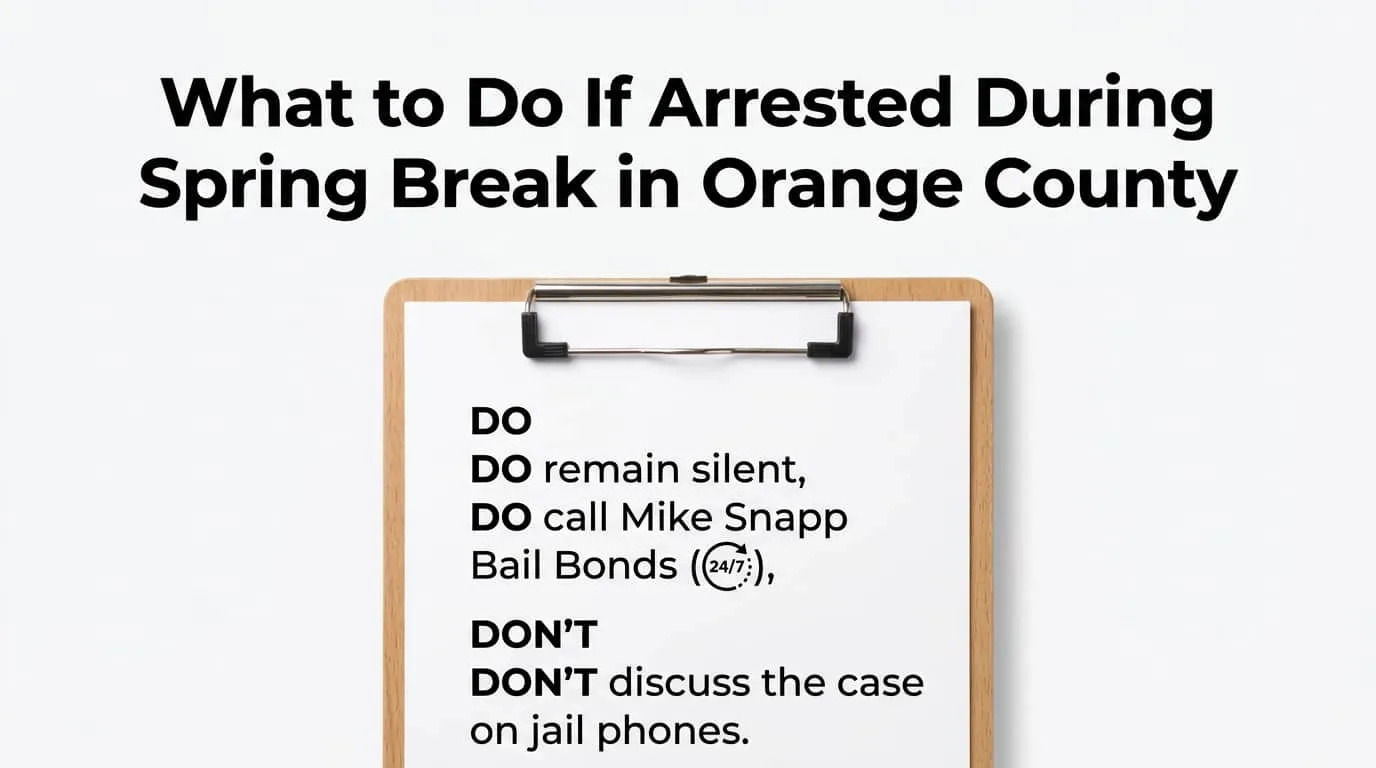
For the person who was arrested, the rights are clear under Florida law. They have the right to remain silent, and they should use it. Politely tell the officer: "I'm choosing to remain silent and I'd like to speak with an attorney." Nothing else. No explanations, no details, no friendly conversation. Anything said before an attorney is present can be used in court, and even innocent-sounding statements can create problems later.
Don't consent to searches. Don't argue. Don't resist. Cooperation with the physical process of arrest is not the same as waiving legal rights, and keeping that distinction clear can protect your loved one's case down the line.
What Happens at the Orange County Jail After an Arrest?
After an arrest in Orange County, the person is taken to the Orange County Booking and Release Center on 37 W. Cedar St. The booking process includes fingerprinting, a photograph, and a review of the charges. Bail is typically set during this process, though in domestic violence cases, it's not set until the following day before a judge.
Processing takes time. Realistically, families should expect 4 to 8 hours from the moment of arrest before release is even possible, and that's after bail has been posted. The Orange County court system handles a high volume of cases, and Spring Break only increases that load. Patience matters here, but so does moving quickly on the bail side so you don't add unnecessary hours.
Once charges are filed, the case enters the Orange County court system. For tourists and out-of-state visitors, this creates a logistical challenge: court dates may require returning to Central Florida weeks or even months after the arrest.
What Are the Most Common Spring Break Charges in Orange County?
The three charges that come up most frequently during Spring Break near the theme parks and resort corridors are DUI, disorderly conduct, and underage drinking violations.
DUI in Florida carries serious consequences. A first offense can result in fines between $500 and $1,000, up to 6 months in jail, license suspension, and mandatory DUI school. If the blood alcohol level is 0.15 or above, those penalties increase significantly. Bail for a standard first-offense DUI in Orange County typically ranges from $500 to $2,500 depending on the circumstances.
Disorderly conduct, often called "breach of peace" under Florida Statute 877.03, is a second-degree misdemeanor. It's one of the most common charges during high-traffic holiday weekends around areas like Universal's CityWalk or the Orange County Convention Center district. Bail is usually lower, often $250 to $500, but the charge still carries potential jail time and a criminal record.
Underage drinking violations under Florida Statute 562.11 apply to anyone under 21 found in possession of alcohol. It's a second-degree misdemeanor with fines up to $500 and possible driver's license suspension, even if no vehicle was involved.
How Does Bail Work in Orange County?
Bail in Florida is regulated by the state. A bail bondsman Orlando Florida clients work with will charge 10% of the total bail amount as their fee. So if bail is set at $5,000, the fee to secure a bond is $500. That fee is non-refundable — it's the cost of the service.
What families need to understand is that paying the full bail amount directly to the court is also an option, but most people don't have $5,000 or $10,000 available on short notice. That's exactly why bail bonds exist. A bondsman posts the full amount on your behalf, and you pay the 10% fee.
Mike Snapp Bail Bonds also offers affordable bail bonds with no-interest payment plans and accepts all major credit cards, so the full 10% doesn't have to be paid all at once. Every case is handled individually.
The average processing time once a bond is posted runs between 1 and 3 hours. Given that Spring Break season sees a higher-than-usual intake at the booking center, having a bail bondsman Orlando Florida families can rely on, one who's already located near the jail and knows the local system, cuts down on delays.
Do You Really Need a Local Florida Attorney?
Yes. An out-of-state or general practice attorney who doesn't know Orange County statutes, local prosecutors, or the tendencies of the county court system is working at a disadvantage from day one.
Florida has specific statutes that apply to everything from DUI (Chapter 316.193) to open container violations. Orange County has its own procedures and local court culture. An attorney who regularly appears in Orange County courtrooms knows what arguments work, what deals are typically offered for first-time offenders, and how to handle cases involving out-of-state defendants who can't easily return to Florida.
Start the search for local counsel as soon as bail is arranged. The first 24 to 48 hours after an arrest are critical for preserving evidence and beginning to build a defense strategy.
How Does a Spring Break Arrest in Orange County Affect Someone's Future?
This is the question families often ask after the immediate panic settles. The answer depends on the charge, the outcome of the case, and the steps taken afterward.
A conviction, even for a misdemeanor, creates a permanent criminal record that shows up on background checks. For college students, this can affect financial aid, housing applications, and post-graduation employment opportunities. For professionals, certain licenses and certifications can be at risk.
Florida does offer a path to expungement or record sealing for some first-time offenders. To qualify, the person generally can't have a prior criminal record, and the charge must meet eligibility requirements under Florida Statute 943.0585 (expungement) or 943.059 (sealing). An attorney can evaluate whether the charge qualifies and walk through the process, which typically takes 4 to 6 months to complete.
The key point: a Spring Break arrest doesn't have to define someone's future, but it does require taking the right steps from the very beginning.
What Are the Steps for Staying Safe the Rest of Spring Break?
A few practical guidelines can prevent a vacation from turning into a legal situation:
- Know the local laws. Florida's open container laws, public intoxication statutes, and underage drinking rules are strictly enforced in high-traffic areas, especially around resort corridors near Walt Disney World and Universal.
- Don't rely on ride-sharing apps as a plan B. Plan transportation before going out. Surge pricing and app outages during busy nights near Orange County's entertainment districts are real problems.
- Keep a written emergency contact list. Phones get confiscated at booking. Know the number of a family member and a bail bondsman Orlando Florida families use who is available 24/7.
- If questioned by police, stay calm and ask for an attorney. This applies whether someone is guilty, innocent, or simply a witness.
Get Your Loved One Home Fast
An arrest during Spring Break in Orange County is stressful, but it's also manageable when you have the right people in your corner. The most urgent step is securing release, and the faster bail is posted, the faster your loved one gets home.
Mike Snapp Bail Bonds has been serving Orange County families since 1978, with 24/7 availability and an average release processing time of 1 to 3 hours. Call (407) 246-0919 any time, day or night. A real person answers every call, not a machine, and they'll start working on the release immediately.