
3910 S John Young Pkwy. Suite A, Orlando, FL 32839
Se Habla Español - Call Us Today!
(407) 246-0919
Getting arrested in Orlando for the first time is overwhelming. You're sitting in Orange County Jail, and suddenly you're hearing terms like "secured bond" and "unsecured bond" without any idea what they mean or which one applies to you. Understanding the difference can determine how fast you get home and how much it costs.
Need help right now? Call Mike Snapp Bail Bonds at (407) 246-0919. They've helped Orlando families get released since 1978 and are available 24/7.
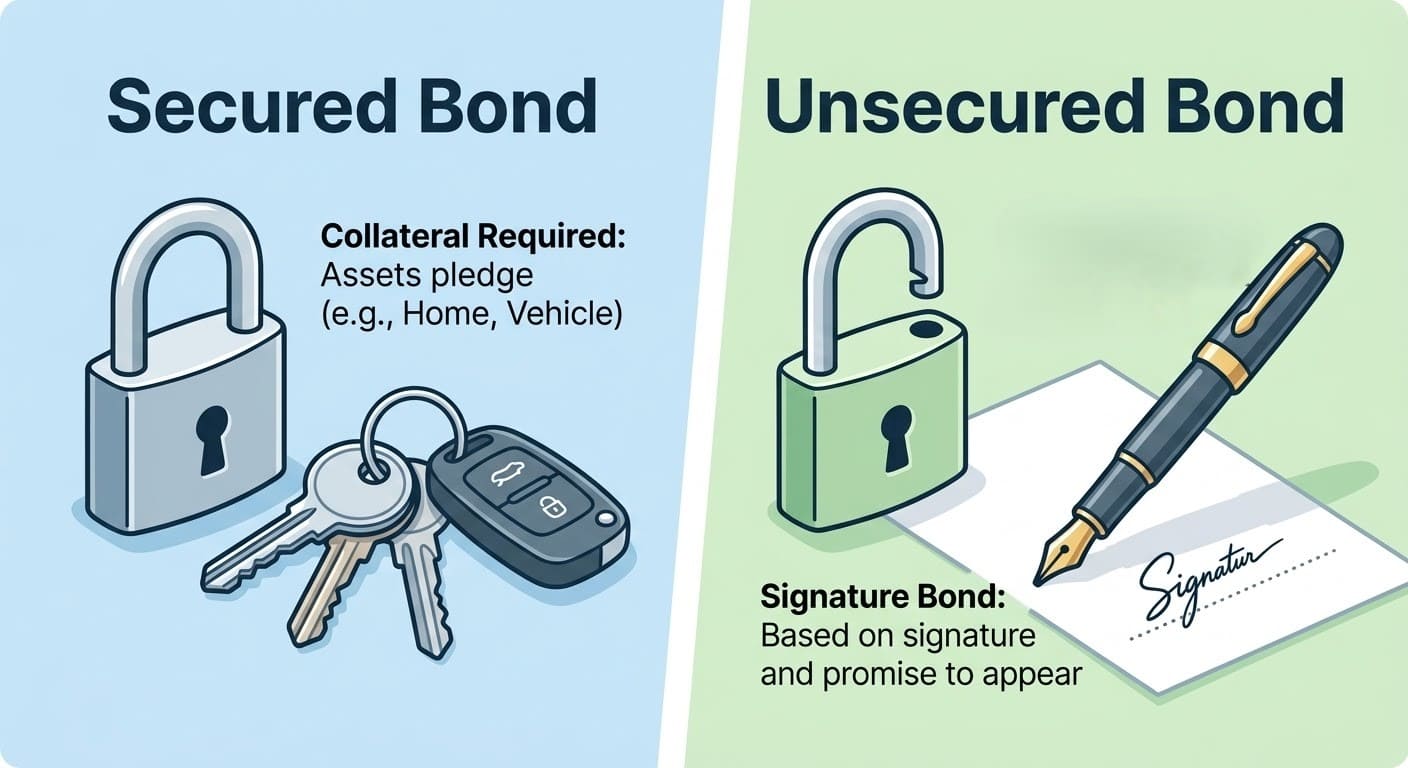
A secured bail bond requires some form of collateral or financial guarantee before the court releases a defendant. That guarantee comes in one of three forms: cash paid directly to the court, real property (like a house or vehicle) pledged as collateral, or a surety bond written by a licensed bail bondsman.
The surety bond route is by far the most common in Central Florida. Here's how it works: a licensed bondsman like Mike Snapp Bail Bonds posts the full bail amount on your behalf. You pay 10% of that total as a non-refundable fee. So if your bail is set at $10,000, your out-of-pocket cost is $1,000. The bondsman then guarantees the remaining $9,000 to the court. Florida state law sets that 10% rate, so it's consistent across all licensed bondsmen.
Secured bonds are standard for most criminal charges in Orange County, including felonies, drug offenses, DUIs, and violent crimes. If you've been charged with something serious, expect the judge to require a secured bond.
An unsecured bail bond, often called a signature bond or a personal recognizance (PR) bond, requires no upfront payment and no collateral. You sign a written promise to appear at all court dates. If you miss a court date, you owe the full bail amount.
Florida judges grant unsecured bonds in a small percentage of cases, typically for first-time, non-violent misdemeanors with low flight risk. A judge might grant a PR bond to someone arrested for a minor infraction near Downtown Orlando or Winter Park, especially if that person has strong community ties, steady employment, and no prior criminal history.
The catch? Getting approved for an unsecured bond isn't something you control. The judge decides, and most defendants facing anything more serious than a minor misdemeanor won't qualify.
The core difference comes down to three things: financial risk, upfront cost, and who guarantees your appearance in court.
Financial risk: With a secured bond, the bondsman takes on the financial risk. With an unsecured bond, you personally owe the full bail amount if you fail to appear. Miss court on a $50,000 unsecured bond, and that's what you owe the state.
Upfront cost: A secured surety bond costs you 10% of the bail amount upfront, paid to the bondsman. An unsecured bond costs nothing upfront, but that's only if you qualify.
Release speed: Secured bonds through a licensed bondsman are often the fastest path out of Orange County Jail. Mike Snapp Bail Bonds is located minutes from the Orange County Booking and Release Center. Once the bond is posted, the release process typically takes 4 to 8 hours, depending on jail processing volume.
Florida judges consider several factors when setting bail and deciding whether to require collateral.
Criminal history is the biggest factor. A first-time offender facing a misdemeanor charge has a much stronger case for a PR bond than someone with prior convictions. If this is your first arrest, tell your attorney clearly. That history (or lack of it) matters.
Flight risk is assessed based on local ties. Do you own property in Orlando? Do you have family here? Have you lived in the same neighborhood for years? Judges look at these things. Someone renting an apartment in the College Park area with long-term employment nearby is viewed very differently than someone with no local connections.
Charge severity determines the baseline. Under Florida Statute 903.046, judges must consider the nature of the offense, potential penalties, and the safety of the community. Felonies almost always require secured bonds. Many misdemeanors can qualify for unsecured bonds, but it's not guaranteed.
Bail amount set by the judge also matters. Orange County follows a standard bail schedule for common offenses. A second-degree misdemeanor might carry a $500 bail, while a third-degree felony can run $5,000 to $25,000 or more. Your bondsman can explain what's typical for your specific charge.
A licensed bondsman specifically handles secured surety bonds. That's their function in the legal system. They're not involved in unsecured PR bonds, since no financial guarantee is needed.
That said, a good bondsman is also a valuable source of guidance. We've helped first-time offenders in Orange County work through the paperwork, understand their court obligations, and avoid mistakes that could result in bond revocation. A revoked bond means you're back in jail until your case is resolved.
Florida requires all bail bondsmen to be licensed through the Department of Financial Services. Working with an unlicensed bondsman puts both your money and your release at risk. Mike Snapp Bail Bonds has operated under Florida licensing requirements since 1978, and every agent knows Orange County's court system inside and out.
If cost is a concern, ask about affordable bail bonds with flexible payment plans. Mike Snapp Bail Bonds offers no-interest payment arrangements, so the 10% fee doesn't have to come all at once.
Can a judge change my bond from secured to unsecured?
Yes, through a bond reduction hearing. Your attorney can petition the court to reduce or modify the bond. Bring evidence of local ties, employment, and a clean record. This process typically takes several days to schedule.
What happens if I can't afford the 10% fee for a secured bond?
Call a bondsman before assuming you're stuck. Mike Snapp Bail Bonds offers payment plans with no interest. You may be able to make a partial payment upfront and cover the rest over time.
How long does it take to get released after a bond is posted in Orange County?
Most releases take 4 to 8 hours after the bond is posted. Busier periods, like weekends or holidays, may run longer. Your bondsman will keep you updated throughout the process.
Is the 10% bail bond fee refundable in Florida?
No. Florida law sets the 10% premium as the cost of the bondsman's service. It's non-refundable regardless of how the case ends, whether charges are dropped or you're found not guilty.
If you or someone you know is facing a bail decision in Orange County, don't wait to get answers. The faster you act, the faster someone gets home.
Mike Snapp Bail Bonds has helped thousands of families navigate bail bonds in Orlando, Florida since 1978. The team answers calls 24 hours a day, seven days a week, with no answering service and no runaround. Call now: (407) 246-0919